

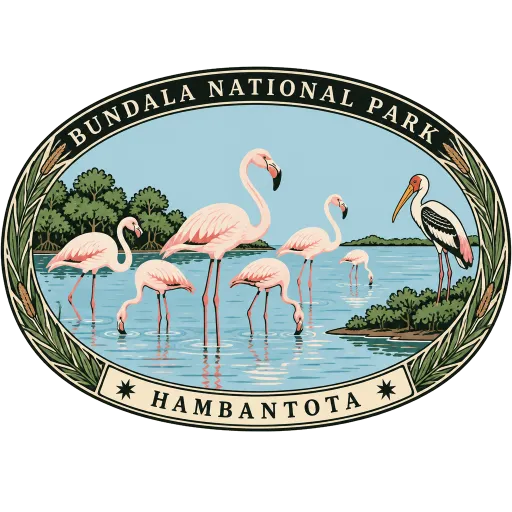
Bundala National Park
A coastal park of lagoons and scrub that is an important winter home for migratory water birds, with 197 species recorded and flocks of greater flamingos the highlight. In 1991 it became Sri Lanka's first Ramsar wetland, and in 2005 a UNESCO biosphere reserve.
- Where
- Hambantota, Southern Province, Sri Lanka
- Grade
- Heritage site
- Worth
- 10 points collected on site, plus 3 for its grade
- Coordinates
- 6.2139, 81.2250
Get the Bundala National Park stamp
Open LOQAH when you are at Bundala National Park. It checks where you are once, at that moment, and the stamp is yours: confirmed on site in gold and struck with the date. It goes into your Southern Province volume with your photos and a note.
Near Bundala National Park
Tissamaharama Raja Maha Vihara 10 km
One of the four great monasteries founded in Sri Lanka after the monk Mahinda brought Buddhism to the island. From the 3rd century BC to the 11th century AD it was the leading centre of Buddhist learning in the south, and its white dagoba is one of the largest stupas in the country.
Kataragama Devalaya 26 km
A temple complex once deep in the jungle, dedicated to the deity Kataragama, honoured by Hindus as the war god Murugan. It is one of the few sacred sites revered by Buddhists, Hindus, Muslims and the Vedda people alike, with shrines and a mosque standing side by side.
Kiri Vehera 26 km
A white stupa 800 metres north of the Kataragama Devalaya, probably dating to the 3rd century BC. It is counted among the Solosmasthana, the 16 most sacred Buddhist pilgrimage sites of ancient Sri Lanka, and pilgrims bring it flowers after visiting the shrines below.
Ussangoda National Park 29 km
A patch of high ground by the sea near Ambalantota, a national park and archaeological site in the southern turtle nesting zone. Unlike the land around it, its flat top is covered only in grass and a few pockets of dwarf forest, over strikingly red soil.
Sithulpawwa Rajamaha Viharaya 31 km
An ancient monastery among the rocks of the Yala forest, 18 km east of Kataragama, believed to have been founded by King Kavantissa in the 2nd century BC. Its name comes from Chiththala Pabbatha, the hill of the quiet mind, and the rock summit looks out over the jungle.
Udawalawe National Park 45 km
Grassland and scrub on the border of Uva and Sabaragamuwa, set aside in 1972 as a refuge for animals displaced by the reservoir on the Walawe River. It covers some 30,800 hectares and is one of the surest places on the island to see wild elephants.
Yala National Park 48 km
A 979 square kilometre park on the Indian Ocean, protected since 1900, with monsoon forest, scrub, lagoons and beach. It is the best known place in Sri Lanka to see leopards, and also shelters elephants and 215 species of birds.
Mulkirigala Raja Maha Vihara 55 km
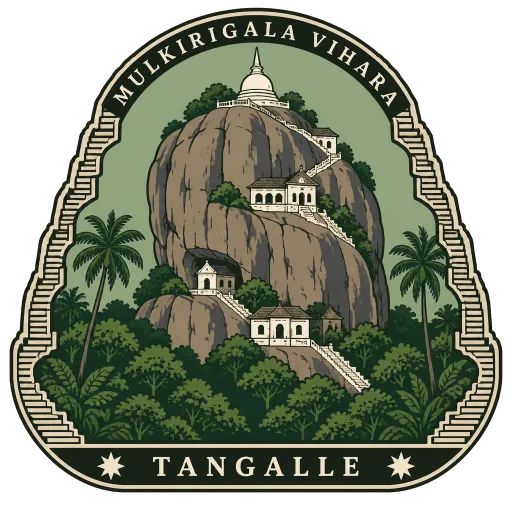
An ancient Buddhist temple built up the sides of a 205 metre natural rock, ringed by four smaller rocks. Stairs climb past a series of cave shrines with reclining Buddhas and murals to the stupa at the summit.




More heritage sites in Southern Province
Questions
Where is Bundala National Park?
Bundala National Park is in Hambantota, Southern Province, Sri Lanka. The nearest other LOQAH stamps are Tissamaharama Raja Maha Vihara (10 km), Kataragama Devalaya (26 km), Kiri Vehera (26 km).
How do I get the Bundala National Park stamp?
Open LOQAH when you are at Bundala National Park and get its stamp. The app checks where you are once, at that moment, and the stamp goes into your Southern Province volume, confirmed on site, with the date.
I have been to Bundala National Park before. Can I still have the stamp?
Yes. Add it from Earlier trips in your Southern Province volume, with the date if you know it, or import your Google Timeline and LOQAH matches the places you were.
Collect your first stamp.
LOQAH is free on iPhone and Android, in India and 20 more countries, with more countries on the way. Stand at a place, collect its stamp, and keep every trip in a passport that grows.