

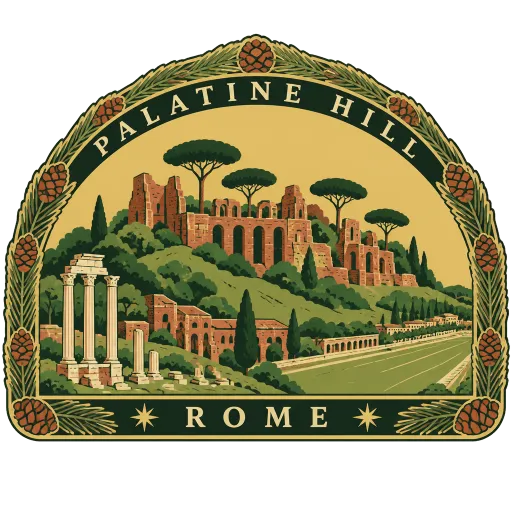
Palatine Hill
The centremost of Rome's seven hills and one of the oldest inhabited parts of the city, where emperors later built their palaces. Today it is an open-air museum of ruins and pine trees, looking down on the Forum on one side and the Circus Maximus on the other.
- Where
- Rome, Lazio, Italy
- Grade
- Well known
- Worth
- 10 points collected on site, plus 1 for its grade
- Coordinates
- 41.8883, 12.4869
Get the Palatine Hill stamp
Open LOQAH when you are at Palatine Hill. It checks where you are once, at that moment, and the stamp is yours: confirmed on site in gold and struck with the date. It goes into your Lazio volume with your photos and a note.
Near Palatine Hill
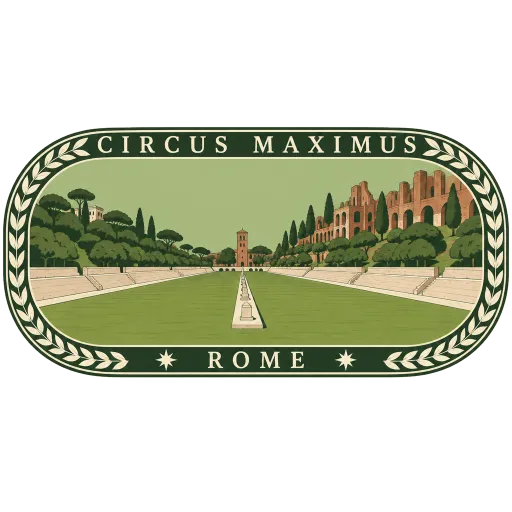
Circus Maximus 0.3 km
The valley between the Palatine and Aventine hills where ancient Rome raced its chariots, on a track 621 metres long that could hold more than 150,000 spectators. Little stonework survives, but the long grassy oval is now a public park that keeps the shape of the course.
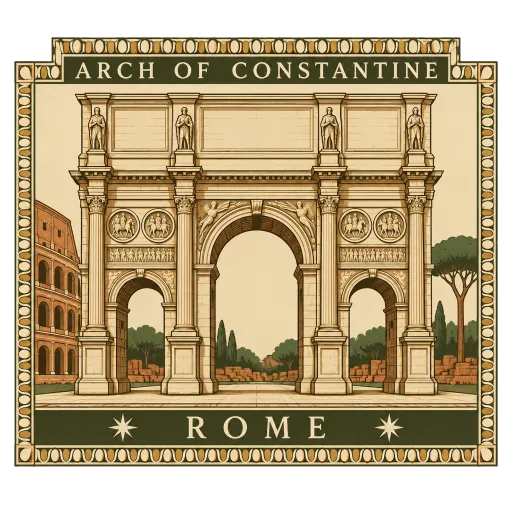
Arch of Constantine 0.3 km
The largest Roman triumphal arch, 21 metres high, raised by the Senate and dedicated in AD 315 to mark Constantine's victory at the Milvian Bridge. It stands between the Colosseum and the Palatine on the old triumphal route, and much of its carving was taken from earlier imperial monuments.
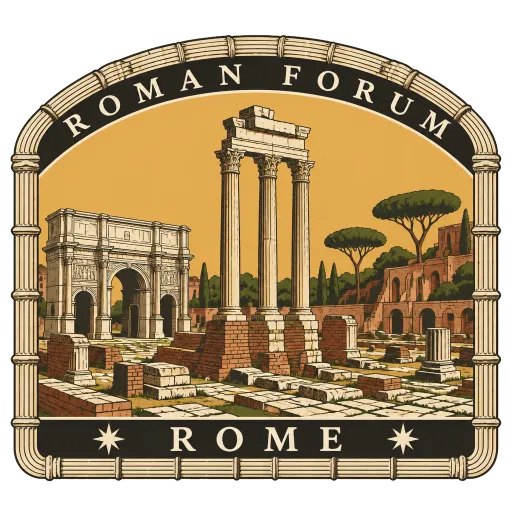
Roman Forum 0.5 km
A long rectangle of columns, arches and temple footings that was once the centre of public life in ancient Rome. It began as a marketplace and grew into the place where Romans voted, traded, heard speeches and held triumphs, with the Palatine on one side and the Capitoline on the other.
Colosseum 0.5 km
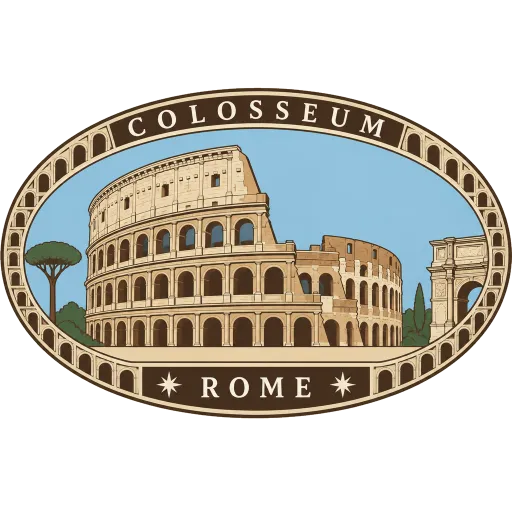
The largest amphitheatre the Romans ever built, begun under Vespasian in AD 72 and finished by his son Titus in AD 80. Its proper name, the Flavian Amphitheatre, comes from the family of emperors who paid for it, and its broken outer ring still stands over the eastern end of the Forum.
Capitoline Museums 0.6 km
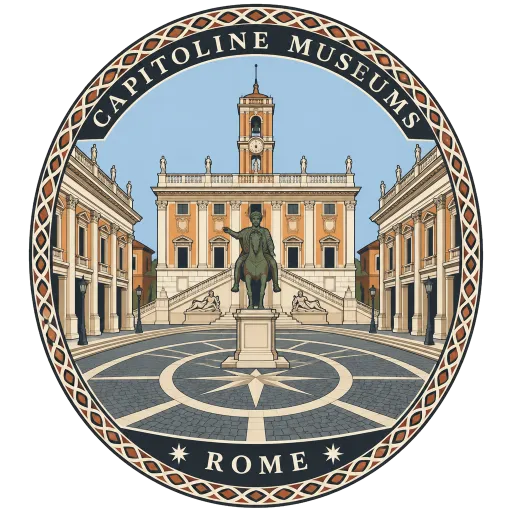
Rome's own civic museums, set in two palaces that face each other across Michelangelo's Piazza del Campidoglio on the Capitoline Hill. Among the ancient pieces inside are the bronze she-wolf and the original equestrian statue of Marcus Aurelius.
Altare della Patria 0.8 km
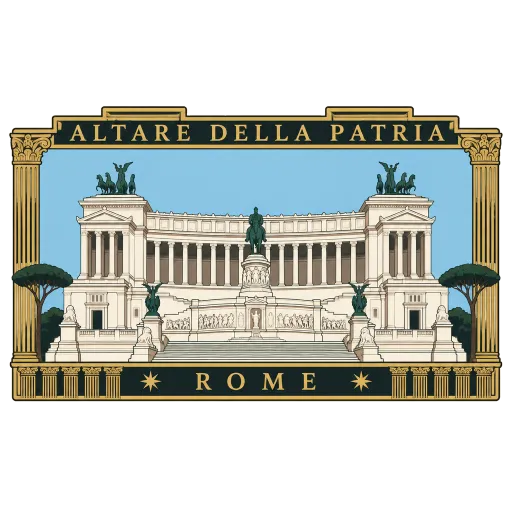
A vast white monument to Victor Emmanuel II, the first king of united Italy, built between 1885 and 1935 to a design by Giuseppe Sacconi. It rises in tiers of columns and statues above Piazza Venezia, and Romans have long given it nicknames like the wedding cake and the typewriter.
Trajan's Market 0.8 km
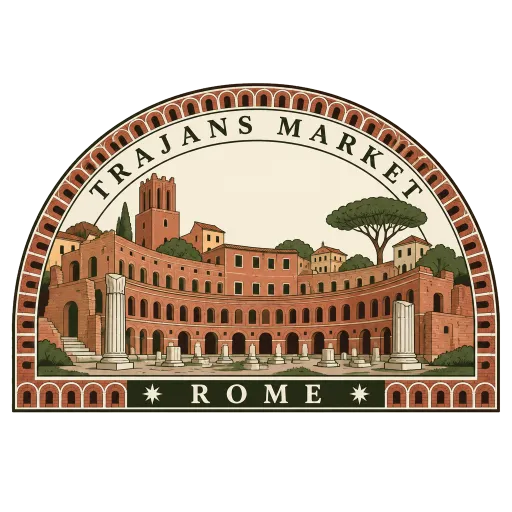
A large brick complex built as part of Trajan's Forum and set into the cut-away flank of the Quirinal Hill. Its curving halls, arcades and upper streets give a rare sense of what a working ancient Roman building felt like, and it now houses the Museum of the Imperial Forums.
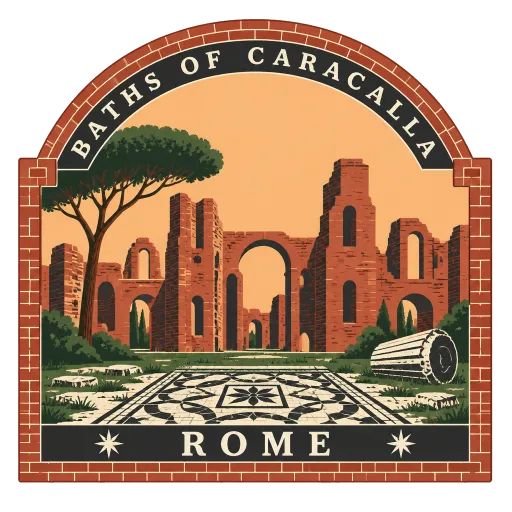
Baths of Caracalla 1.0 km
The shell of a huge public bath complex built around AD 212 to 216 under Septimius Severus and Caracalla, the second largest in Rome. Its brick walls still stand to great height, and in summer the ruins become an open-air stage for opera.
More famous places to visit in Lazio
Questions
Where is Palatine Hill?
Palatine Hill is in Rome, Lazio, Italy. The nearest other LOQAH stamps are Circus Maximus (0.3 km), Arch of Constantine (0.3 km), Roman Forum (0.5 km).
How do I get the Palatine Hill stamp?
Open LOQAH when you are at Palatine Hill and get its stamp. The app checks where you are once, at that moment, and the stamp goes into your Lazio volume, confirmed on site, with the date.
I have been to Palatine Hill before. Can I still have the stamp?
Yes. Add it from Earlier trips in your Lazio volume, with the date if you know it, or import your Google Timeline and LOQAH matches the places you were.
Collect your first stamp.
LOQAH is free on iPhone and Android, in India and 20 more countries, with more countries on the way. Stand at a place, collect its stamp, and keep every trip in a passport that grows.