


Sangiran
An excavation site north of Solo that ranks among the most important in the world for the study of early humans. Fossils of Homo erectus have been found here in large numbers, and a museum on the site displays them.
- Where
- Solo, Central Java, Indonesia
- Grade
- UNESCO heritage
- Worth
- 10 points collected on site, plus 8 for its grade
- Coordinates
- -7.4500, 110.8500
Get the Sangiran stamp
Open LOQAH when you are at Sangiran. It checks where you are once, at that moment, and the stamp is yours: confirmed on site in gold and struck with the date. It goes into your Central Java volume with your photos and a note.
Near Sangiran
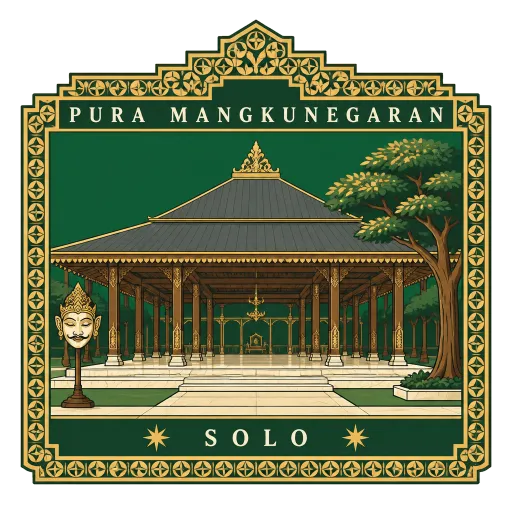
Pura Mangkunegaran 13 km
The palace of the Mangkunegara princes in the heart of Surakarta, now partly open as a museum. Its great open pendopo, a Javanese pavilion on wooden pillars, leads to rooms holding the family's collection of royal heirlooms, masks and dance costumes.
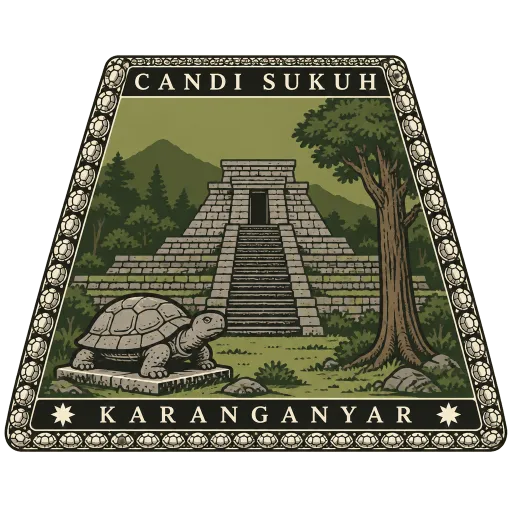
Candi Sukuh 37 km
A 15th-century Hindu temple on the western slope of Mount Lawu, built as a plain stepped pyramid unlike any other candi in Java. Its reliefs and statues, including three tortoises with flattened shells, deal frankly with birth, life before it and sexual education.
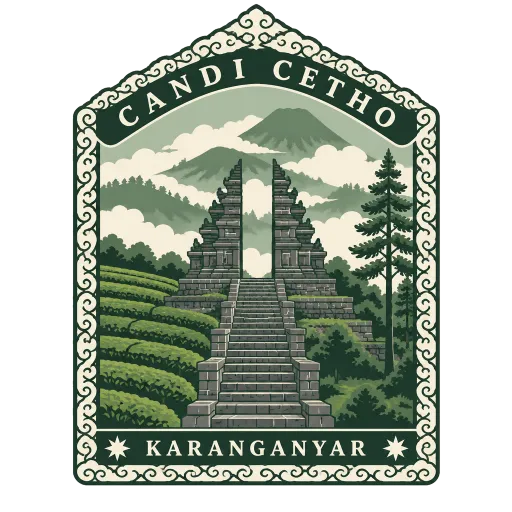
Candi Cetho 38 km
A 15th-century Javanese Hindu temple climbing the western slope of Mount Lawu in a series of terraces, close to the border of Central and East Java. It sits high above the tea gardens and is often wrapped in cloud, and it is still used for Hindu worship.
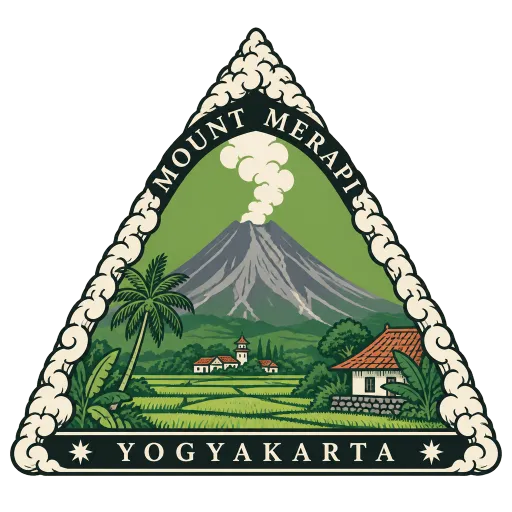
Mount Merapi 46 km
The most active volcano in Indonesia, rising on the border of Central Java and Yogyakarta about 28 kilometres north of the city. It has erupted regularly since 1548, and villages sit on its flanks as high as 1,700 metres.
Plaosan Temple 50 km
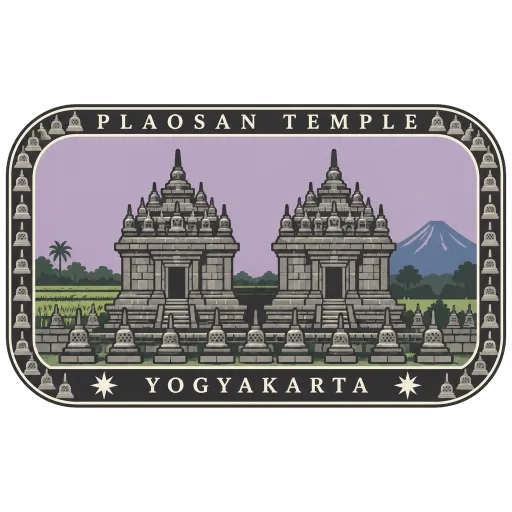
A Buddhist temple complex about a kilometre north-east of Prambanan, in Bugisan village, Klaten. Its twin main shrines are surrounded by rows of small stupas and lesser shrines, and the stone carving is unusually fine.
Sewu Temple 51 km
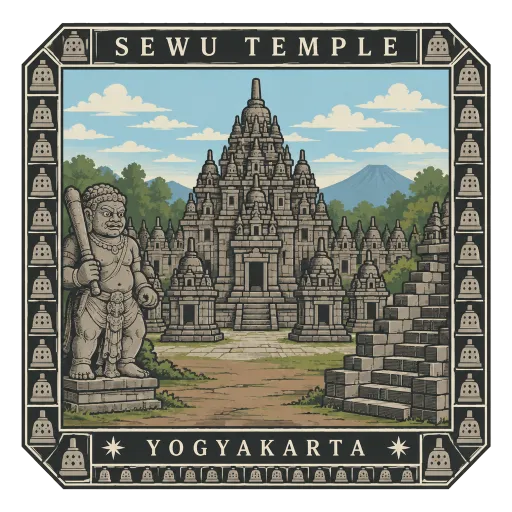
An 8th-century Buddhist complex 800 metres north of Prambanan, older than Borobudur and the second largest of its kind in Indonesia. Its name means 'a thousand temples', from local folklore, though the complex has 249.
Prambanan 52 km
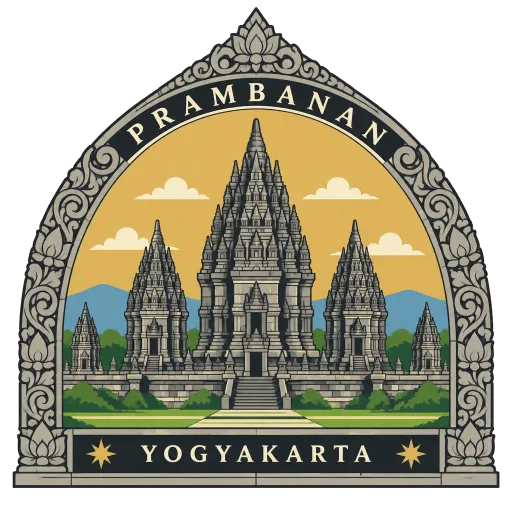
A 9th-century Hindu temple compound dedicated to the Trimurti: Brahma the creator, Vishnu the preserver and Shiva the destroyer. Its tall, pointed central shrine to Shiva rises 47 metres, and its walls are carved with the story of the Ramayana.
Ratu Boko 53 km
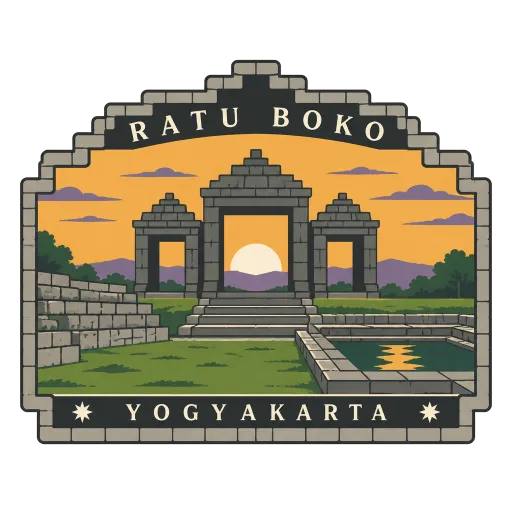
The remains of a hilltop compound on a plateau about 3 kilometres south of Prambanan, with a great stone gateway, terraces and bathing pools. Its original name is unknown, and locals named it after the legendary King Boko of the Roro Jonggrang tale.
More UNESCO World Heritage sites in Central Java
Questions
Where is Sangiran?
Sangiran is in Solo, Central Java, Indonesia. The nearest other LOQAH stamps are Pura Mangkunegaran (13 km), Candi Sukuh (37 km), Candi Cetho (38 km).
How do I get the Sangiran stamp?
Open LOQAH when you are at Sangiran and get its stamp. The app checks where you are once, at that moment, and the stamp goes into your Central Java volume, confirmed on site, with the date.
I have been to Sangiran before. Can I still have the stamp?
Yes. Add it from Earlier trips in your Central Java volume, with the date if you know it, or import your Google Timeline and LOQAH matches the places you were.
Collect your first stamp.
LOQAH is free on iPhone and Android, in India and 20 more countries, with more countries on the way. Stand at a place, collect its stamp, and keep every trip in a passport that grows.